
 Image 1 of 1
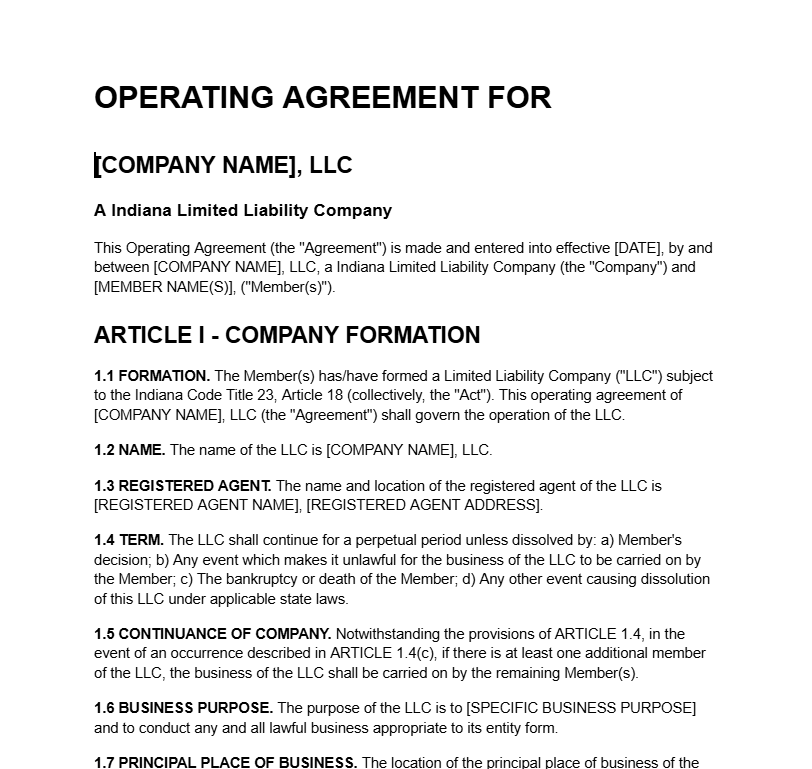
An operating agreement is a legal document that outlines the ownership, management structure, and operating procedures of a limited liability company (LLC). It specifies members’ ownership percentages, voting rights, profit and loss distribution, decision-making processes, roles and responsibilities, procedures for adding or removing members, and steps for dissolution or sale.
Why you need one
Protects limited liability: Clarifies that the LLC is a separate legal entity, helping preserve members’ personal liability protection.
Prevents disputes: Establishes clear rules for governance, conflict resolution, and distributions to reduce misunderstandings among members.
Customizes management: Allows you to define management roles (member-managed or manager-managed) and tailor decision-making authority to your business needs.
Preserves tax flexibility: Documents member agreements on allocations and tax treatment, supporting chosen tax classifications with the IRS.
Facilitates continuity: Provides procedures for transfer of ownership, buyouts, and succession planning, helping the business continue smoothly after changes.
Meets legal or bank requirements: Some states, banks, or investors may require an operating agreement to open accounts or confirm legal structure.
Even for single-member LLCs, an operating agreement is recommended to demonstrate separation between personal and business affairs and to formalize how the business will be run.
An operating agreement is a legal document that outlines the ownership, management structure, and operating procedures of a limited liability company (LLC). It specifies members’ ownership percentages, voting rights, profit and loss distribution, decision-making processes, roles and responsibilities, procedures for adding or removing members, and steps for dissolution or sale.
Why you need one
Protects limited liability: Clarifies that the LLC is a separate legal entity, helping preserve members’ personal liability protection.
Prevents disputes: Establishes clear rules for governance, conflict resolution, and distributions to reduce misunderstandings among members.
Customizes management: Allows you to define management roles (member-managed or manager-managed) and tailor decision-making authority to your business needs.
Preserves tax flexibility: Documents member agreements on allocations and tax treatment, supporting chosen tax classifications with the IRS.
Facilitates continuity: Provides procedures for transfer of ownership, buyouts, and succession planning, helping the business continue smoothly after changes.
Meets legal or bank requirements: Some states, banks, or investors may require an operating agreement to open accounts or confirm legal structure.
Even for single-member LLCs, an operating agreement is recommended to demonstrate separation between personal and business affairs and to formalize how the business will be run.